Routine Maintenance Can Keep Your Instrument Reliable, Responsive, and Performing at Its Best
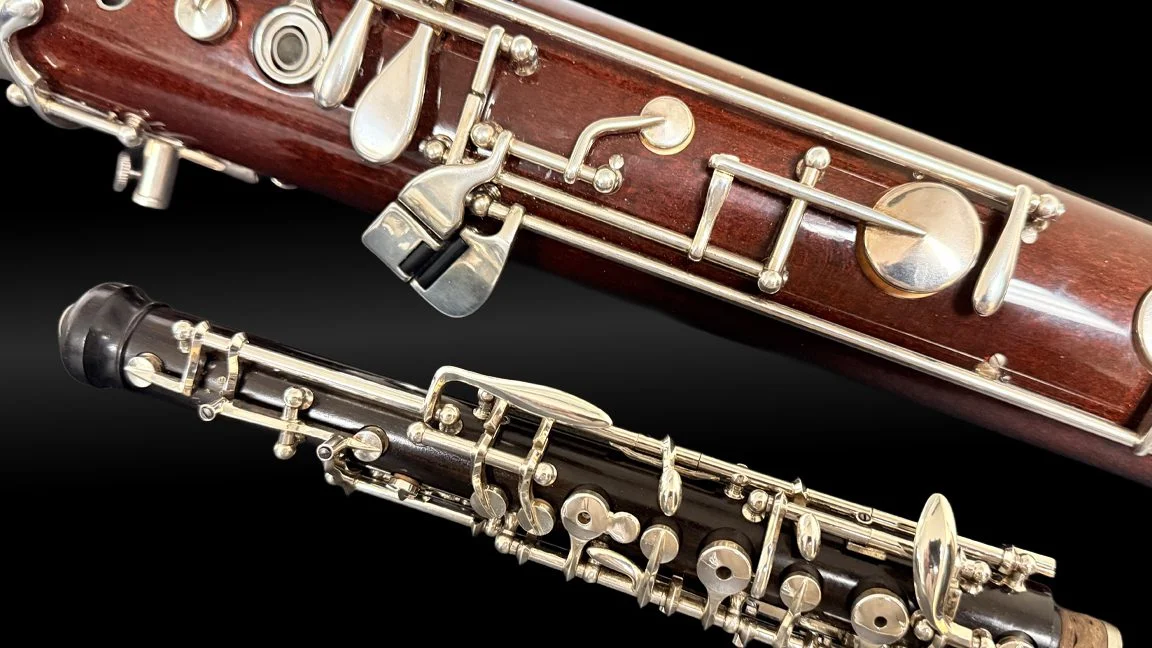
Routine oboe and bassoon maintenance is essential to keep your instrument reliable, responsive, and performing at its best. These complex instruments require regular care to maintain their tone, response, and long-term stability. If your instrument needs attention, you can explore our professional repair and overhaul services.
Why Oboe and Bassoon Maintenance Matters
Oboes and bassoons are among the most intricate instruments in the orchestra. Their remarkable tonal beauty comes from a delicate balance of wood, metal mechanisms, pads, corks, springs, and precise adjustments working together. Because of this complexity, regular professional maintenance is not simply helpful—it is essential. A qualified double reed specialist should clean, oil, and adjust your instrument annually to preserve its performance, protect its value, and keep it reliable for years to come. Regular oboe and bassoon maintenance also helps prevent small issues from becoming costly repairs.
Wooden instruments constantly respond to their environment. Changes in temperature and humidity cause the wood to expand and contract slightly over time. This natural movement can subtly affect the instrument’s mechanism and sealing surfaces. Pads that once sealed perfectly may begin to leak, and keys that once moved effortlessly may become sluggish or misaligned. These changes often occur gradually, and players sometimes adapt to them without realizing the instrument no longer functions at its best.
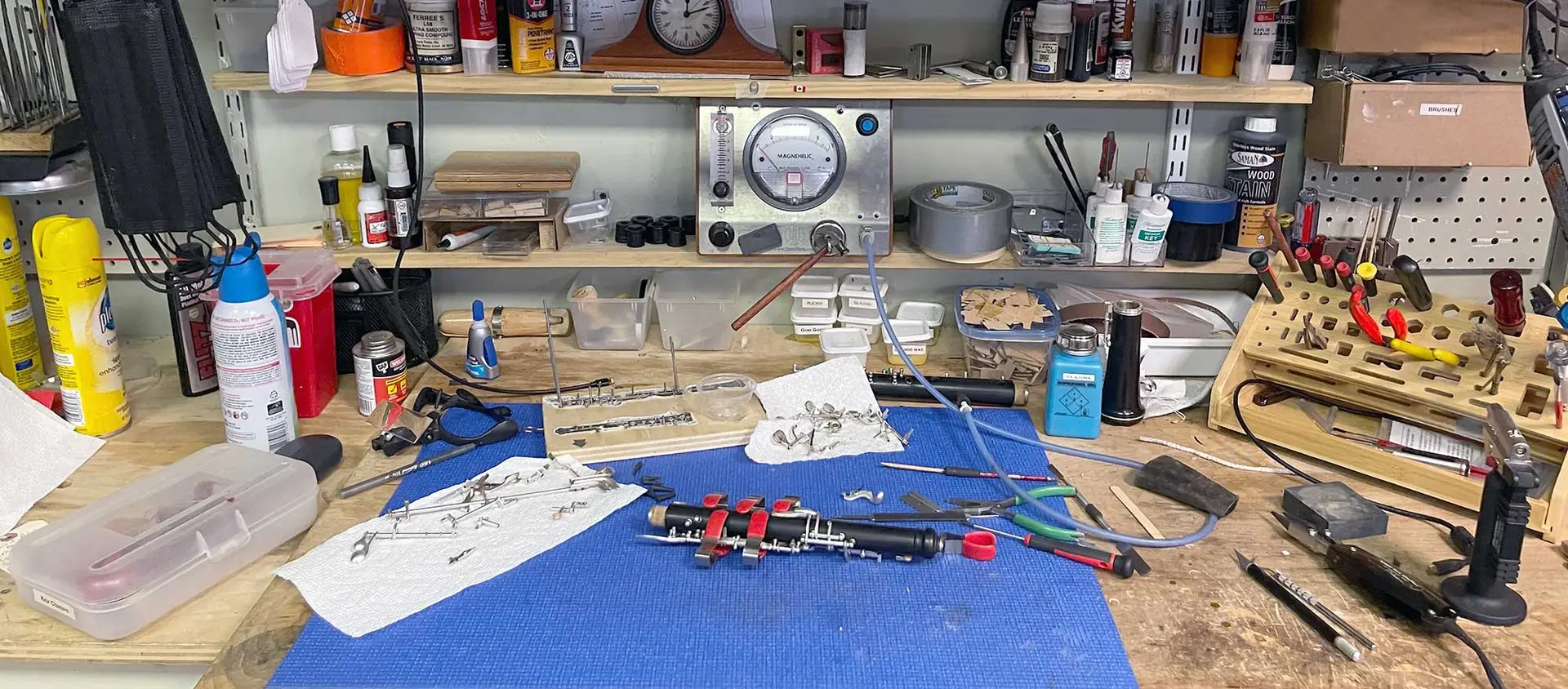
A yearly cleaning and adjustment addresses these small issues before they grow into larger problems. During routine maintenance, a specialist carefully inspects every part of the instrument. The specialist checks pads for proper sealing, evaluates corks and felts for wear, tests springs for tension, and cleans and lubricates rods and hinges. Then, the specialist adjusts the keywork so the many interrelated mechanisms close and open in perfect coordination. When done properly, the instrument feels more responsive, speaks more easily, and produces a more stable and centered tone.
Cleaning in Oboe and Bassoon Maintenance
Cleaning is also an important part of the process. Moisture, dust, and small particles naturally accumulate inside the mechanism and tone holes over time. Even careful swabbing cannot remove everything. Residue from cork grease, oil, or environmental dust can work its way into hinge tubes and moving parts. If left unattended, this buildup can cause keys to move sluggishly or wear prematurely. Professional cleaning removes these contaminants and restores smooth, reliable motion to the mechanism.
Oiling in Oboe and Bassoon Maintenance
Oiling is equally important but must be done correctly and sparingly. Careful lubrication is another critical part of oboe and bassoon maintenance. The rods and hinge tubes that allow keys to rotate are extremely precise. Without proper lubrication, friction gradually increases and metal parts begin to wear against each other. Over time, this can create looseness in the mechanism, leading to noisy keys or poor alignment. A trained technician applies specialized oils in very small amounts to the correct locations, protecting the mechanism while maintaining the instrument’s precise tolerances.
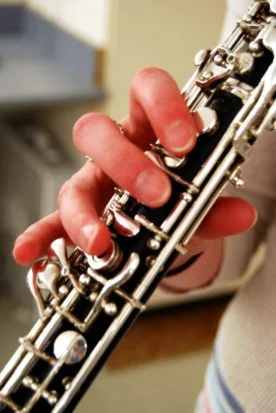
Perhaps the most important aspect of annual maintenance is adjustment. Oboes and bassoons contain many keys that operate together through complex linkages. When one key closes, several others may need to move at exactly the same moment. Even a fraction of a millimeter of misalignment can create leaks that affect response, articulation, and intonation. Regular adjustments ensure that all of these mechanisms work together seamlessly, restoring the effortless feel that players expect from a well-maintained instrument.
Equally important is who performs this work. A qualified double reed specialist understands the unique design and playing requirements of these instruments. Unlike general repair work, servicing oboes and bassoons requires deep familiarity with their mechanical relationships, tonal characteristics, and the expectations of professional players. An experienced specialist can identify subtle issues and make adjustments that enhance both reliability and musical performance.
Finally, routine maintenance protects the long-term health and value of the instrument. Small problems that go unaddressed can eventually lead to costly repairs. Pads that leak for too long may deteriorate more quickly, worn hinge tubes may require rebuilding, and neglected adjustments can place unnecessary stress on delicate components. Annual care prevents these issues and helps preserve the instrument for the future. Consistent oboe and bassoon maintenance ensures long-term reliability and performance. You can also learn more about our annual care services for ongoing maintenance support.
In short, regular cleaning, oiling, and adjustment allow an oboe or bassoon to function as it was designed: responsive, reliable, and capable of producing its full musical voice. Just as a fine automobile or precision watch benefits from periodic servicing, so too does a fine double reed instrument. With proper annual care from a qualified specialist, your instrument will continue to perform beautifully for many years.