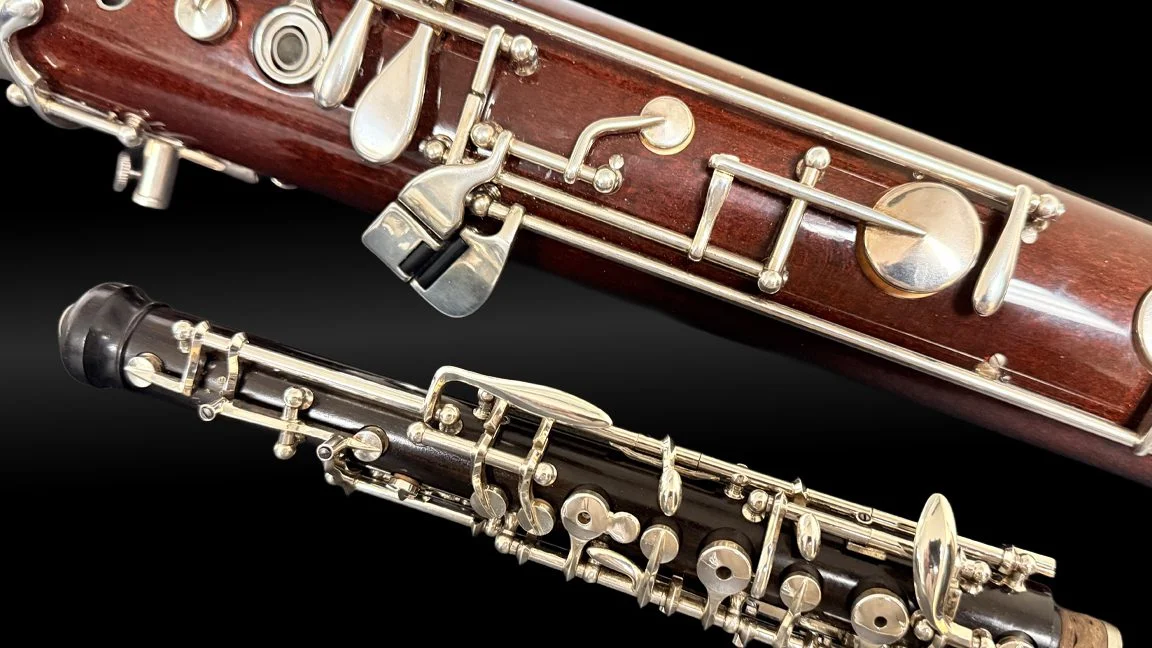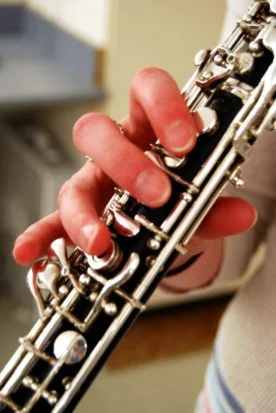
Regular instrument adjustment service helps oboes and bassoons stay responsive, reliable, and comfortable to play. Most players find that having their instrument examined every two years works well. However, if something feels unusual or performance changes suddenly, it’s smart to schedule service sooner.
What Happens During an Instrument Adjustment Service?
A repair technician typically begins with a play test and a full inspection to make sure the pads seal correctly and the mechanism functions smoothly.
At Charles Double Reed Company, we use specialized equipment that measures how much air escapes when all pads are closed. During this process, one side of the joint is sealed while a magnehelic machine pushes a controlled stream of air through the instrument. Any leaks become immediately noticeable.
This type of testing helps identify problems that players may not notice right away.
Cleaning and Maintenance Matter
Dust, moisture, and buildup naturally collect inside the mechanism over time. Depending on how often you practice, your instrument may need anything from a light polish to a more thorough cleaning.
Routine cleaning extends pad life, improves response, and helps the instrument feel more stable under the fingers.
After cleaning, technicians apply light oil to moving metal components where friction naturally occurs. In most cases, this does not need frequent attention. However, players who live in extremely humid or very dry climates may benefit from more regular maintenance.
For more information about proper maintenance standards, players can also explore resources from the International Double Reed Society.
How Long Does an Adjustment Take?
Most routine adjustment appointments take about an hour. Costs vary depending on whether the instrument needs additional work such as crack repair, pad replacement, or bent key repair.
Experienced repair technicians will usually explain the work clearly beforehand and provide an estimate before proceeding.
When Should You Schedule Service Sooner?
While a two-year schedule works well for many players, some signs suggest the instrument should be inspected earlier:
- Sticky or sluggish keys
- Notes that feel resistant
- Sudden intonation problems
- Unstable response
- Air leaks or unusual noises
Small problems often become larger repairs when ignored for too long.
Final Thoughts
Consistent instrument adjustment service keeps an oboe or bassoon functioning properly and helps prevent avoidable wear over time.
A well-maintained instrument responds more easily, seals more reliably, and provides a much more enjoyable playing experience for students and professionals alike.
You can also learn more through our internal instrument repair and annual maintenance pages for additional care recommendations.